

Jamestown S’Klallam Tribe Healing Clinic honored by DJC
REN apartment tower
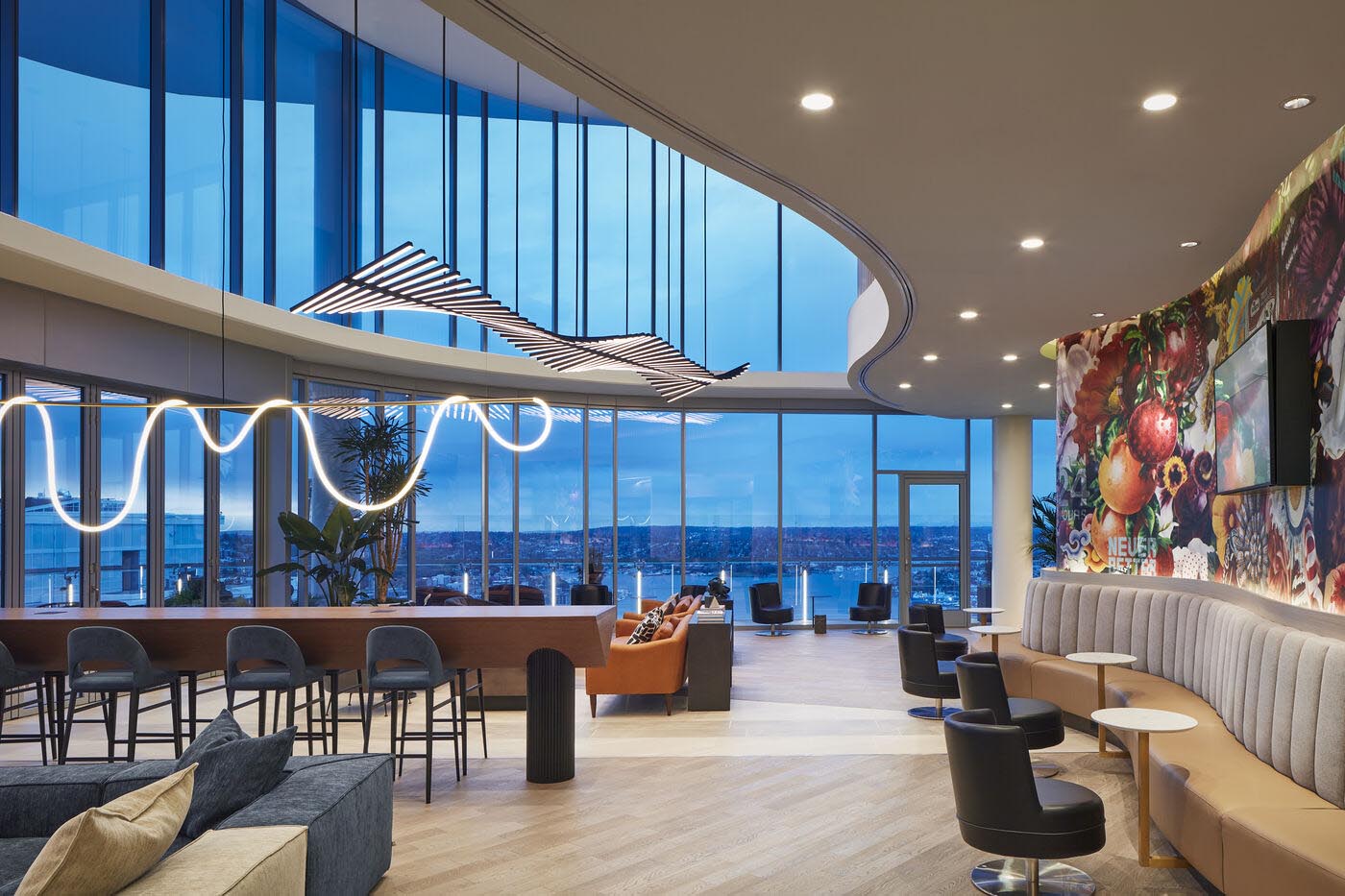
REN brings together art, architecture and nature in the heart of Seattle. Situated along Denny Way, a vital east-west corridor connecting the booming Denny Triangle and South Lake Union neighborhoods, the 41-story residential tower is among a slew of new high-rises catering to the next generation of downtown residents. The building’s unique design expression responds to the compact, triangular site and its high-visibility location at the intersection of two city grids.
Key for the owner was differentiating REN from surrounding rectilinear projects and making a bold statement on the city skyline. Given the tower’s prominence along three street frontages — Denny Way, Fairview Avenue and Virginia Street — it was also important to establish a sense of place and arrival at the street level, enriching the public realm and creating a neighborhood landmark that brings visual interest and excitement to the area. The program includes 457 residential units, the majority of which are now leased, rising gracefully from a three-story podium with 10,000 square feet of commercial frontage and five floors of below-grade parking. One-, two- and three-bedroom units suit a variety of lifestyles, with a clean and modern interior palette inspired by nature. All tower floors have expansive cantilevered balconies that maximize rentable floor area while connecting residents to the project’s urban and natural surroundings.
Part of the developer’s ethos is to build a sense of community with each new project. That was the intention with REN — to not only create homes, but to get residents out of their units and into the building, to activate all the different amenities it has to offer, and to bring people together. Stop by any time of day and residents can be seen socializing in the lobby, taking advantage of the co-working and lounge spaces, exercising in the fitness center, or enjoying sunset yoga with 360-degree views of the city.
“ZGF and 2014 Fairview Ave development set out to design a refined and distinctive structure that stands out from its rectilinear neighbors without compromising on the floor efficiency and area yield. The building features expansive cantilevered balconies on all floors that are arranged in a spiraling form, creating a dynamic and undulating shape while connecting occupants to the Pacific Northwest’s natural surroundings. The balconies and their shingled railing panels enhance the building’s visual movement, adding texture and interest while maintaining an elegant form.”
— Ryan Cheng, principal, ZGF Architects
“When we designed REN, we did so with the idea of bringing something truly unique to Seattle — an elevated rental experience in the heart of the city’s tech sector. With an emphasis on organic design and connection to nature, combined with a hotel-inspired lobby and world-class culinary experiences, we’re proud of the balanced lifestyle it offers residents and the neighborhood. We’re honored to be recognized as the DJC Building of the Year and see our vision so positively welcomed by the community.”
— Dave McCutcheon, vice president of operations, CCB Properties
Here’s what the voters said:“REN is a necessary addition to the Seattle skyline. Innovative design done right.”“What a delight to see a high-rise with a dynamic and bright appearance amongst the many towers in Seattle.”“Beautiful curves. Glad to be a ‘once in a lifetime’ building.”
Project Team
Owner/developer: CCB Properties (a subsidiary of Bosa Properties)
Architect: ZGF Architects
Interiors: CHIL Interior Design
General contractor: Axiom Builders
Structural engineer: Glotman Simpson Consulting Engineers
Mechanical and plumbing: Rushing (design) and Ocean Park (design-build)
Electrical: Nemetz & Associates
Civil engineer: BRH
Landscape: Hewitt
The Runners Ups…
Ovation
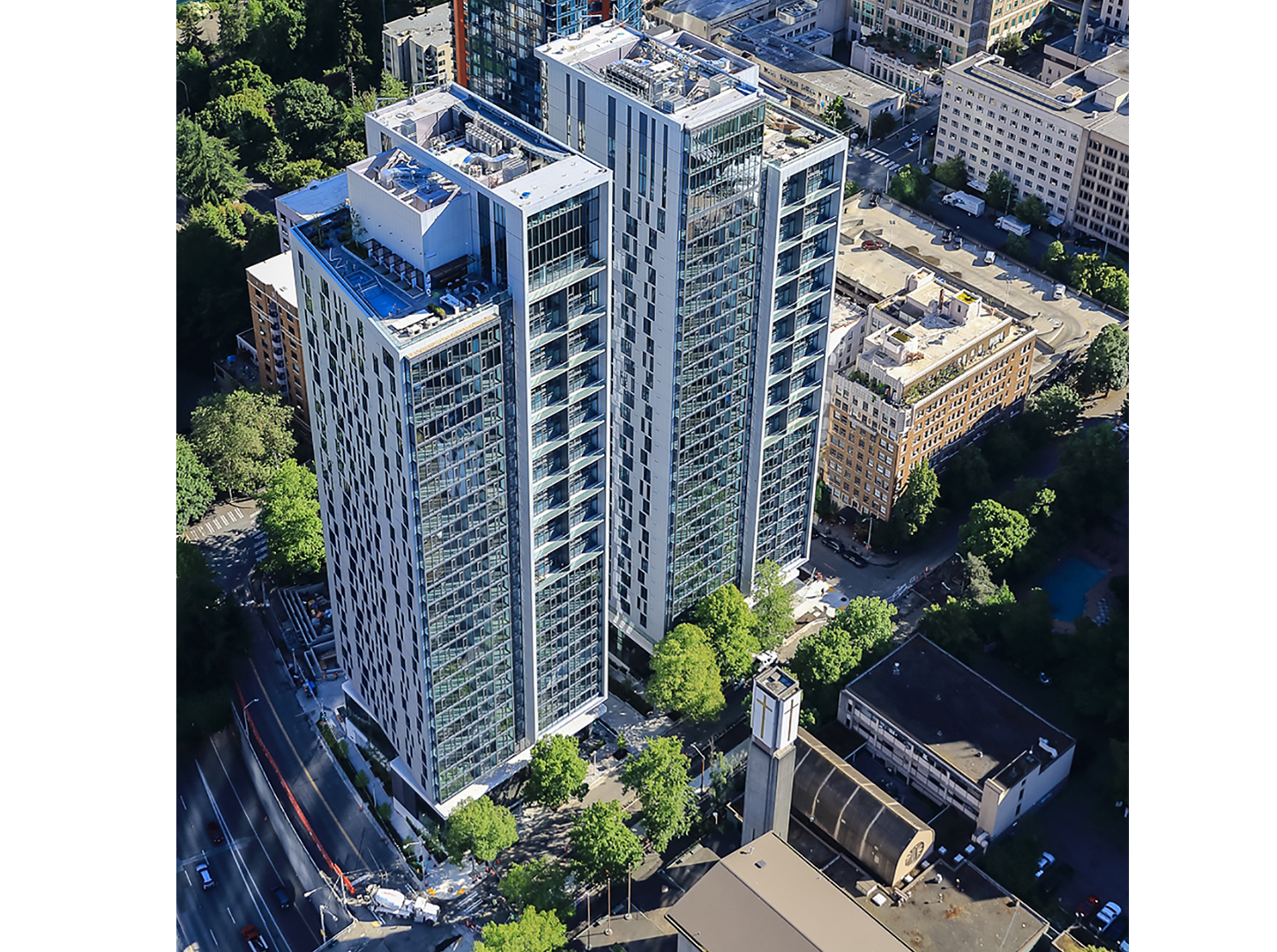
Situated adjacent to the Town Hall culture and performance center, Ovation sets a new standard for collaboration between private, nonprofit and public sectors. The team worked with Town Hall, Freeway Park Association, and the city to renew tired alley and parking facilities to create a quarter-block open space that invites anyone to feel at home. Included are landscaped walkways and plazas that create pedestrian connections to Freeway Park and First Hill’s restaurants, schools and medical centers.
The two-tower luxury community has 548 apartment homes and penthouses in six layouts, including 110 units participating in the city’s Multifamily Tax Exemption program — the first high-rise development to take part in the program. The 32-story towers bring twin “lit lantern” silhouettes to the city skyline and are unmistakably defined by their distinct interior visions. Each tower has a curated local art collection to match its distinct style: one sleek and contemporary and the other classically refined.
Ovation’s focus is on how residents live now, with 17,000 square feet of amenities including a rooftop pool and spa. Work-from-home realities are supported by expansive fitness and co-working spaces, and available Ori transformable furniture. Changing transportation needs are met with 44 EV stalls, expandable to 110 stalls, in the eight-floor underground garage.
“While Ovation is perhaps our most stunning community yet, I’m extremely proud of the constructive collaboration with our neighbors, stakeholders and partners throughout this experience. In particular, we worked diligently with the mayor’s staff to make Ovation the first tower in Seattle to participate in the MFTE program. This means a much needed 110 homes will be set aside for middle-income earners.”
— Brad Reisinger, LMC Pacific Northwest division president
Here’s what the voters said:“What a beautiful project, great to see from I-5.”“Awesome, best lookin project in the USA!”
Project Team
Owner/developer: Quarterra (formerly LMC, a Lennar company)
Architect: Perkins&Will
General contractor: JTM Construction
Structural engineer: DCI Engineers
Civil engineer: Coughlin Porter Lundeen
Landscape architect: PFS Studio
MEP engineer: Glumac
Lighting: LittleFish
Mechanical/plumbing: MacDonald Miller
Electrical/IT: Valley Electric
Concrete: CECO
Drywall: Sessler
Window wall: Quest Window Systems
Tile, marble: Western Tile & Marble
Doors, cabinets: Frontier Door and Cabinet
Drilling: Malcolm Drilling Co.
Earthwork: CTI
Metal panels: Flynn Group
Landscaping, irrigation: Teufel Landscape
Painting: Fawcett Painting
Elevators: Otis
Winthrop Library
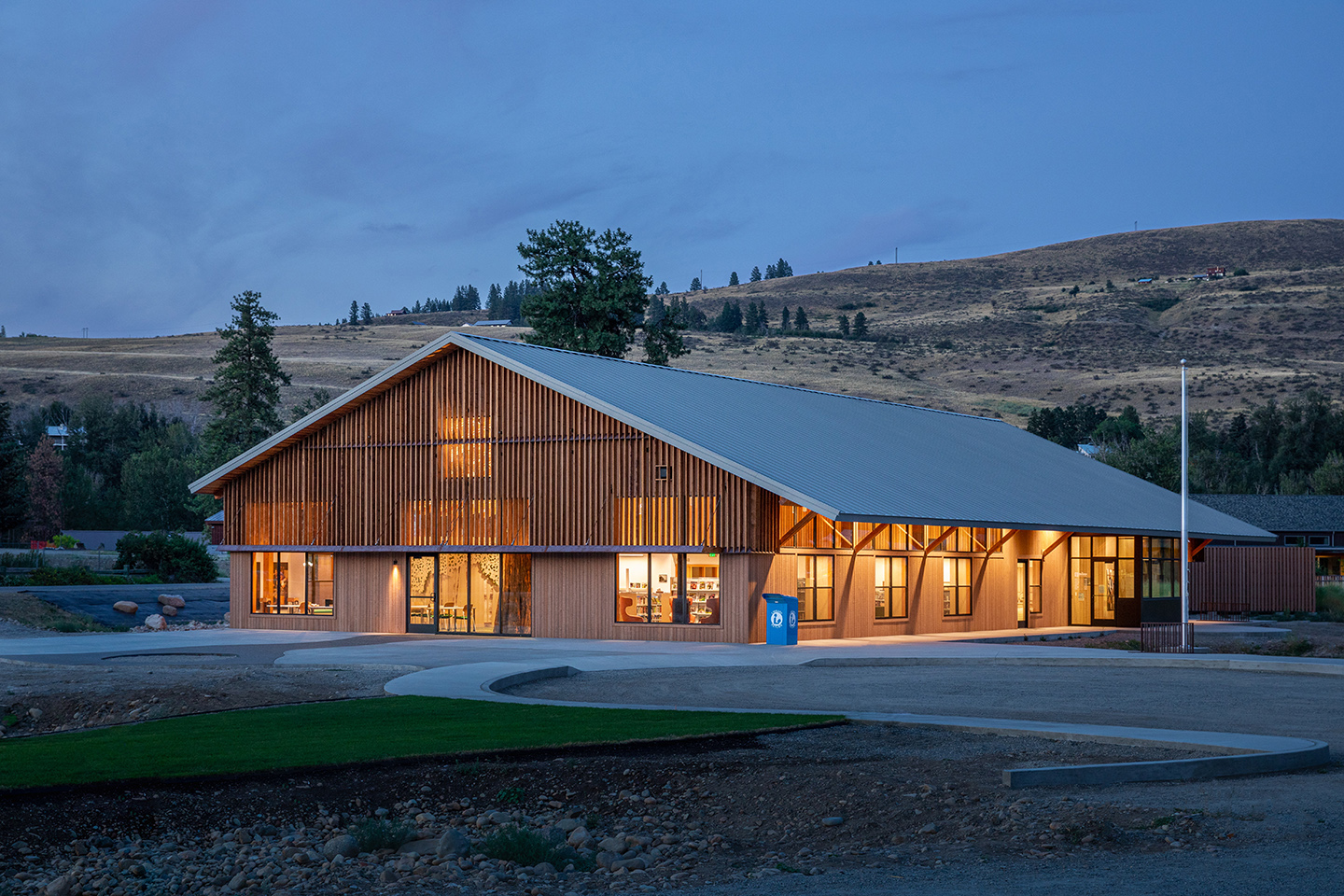
Previously underserved by a small library with inadequate access to resources and services, the Methow Valley community came together to develop a new 7,300-square-foot library. The new Winthrop Library responded to a unique site and community with a wide variety of needs. A strict westernization code for buildings near the town center challenged the architects to create a design that fit the community’s identity as a historic frontier town but complemented the rugged natural environment and prevailing architectural vernacular.
Inspired by the open-air agrarian buildings and barns in the region, the design for the new library includes broad overhangs, open roof trusses, and a visible interior structure. Johnston Architects’ co-founders’ deep roots in and knowledge of the Methow landscape and community are reflected in the design’s intentionality and aesthetic.
The library can hold a collection of over 20,000 materials and includes study tables, casual counter seating, lounge seating and window seats. Computers with internet access help narrow the digital divide in a community with diverse economic demographics. A maker space with a 3D printer and other hands-on technology and art options broaden the patron pool, and a divisible, public meeting room is accessible after hours.
The design team shifted window openings, doorways, overhangs, and a slatted wooden scrim to best control heat gain and glare during the Methow Valley’s arid summers. The building is also designed to accommodate a future solar array on the sloped roof.
Natural and wildlife-inspired design elements were brought into the space, creating an immersive experience for patrons of all ages, including a sculptural “learning tree” made by a local artist that provides an interior niche. Created by Johnston Architects, a plywood-clad “cube” in the acoustically separate children’s area has a custom-designed animal motif, which contains activity desks and built-in reading cubbies to complete the whimsical design — and camouflage a children’s restroom. Additionally, a teen area and a librarian’s workroom were incorporated. A cozy fireplace beckons patrons from the front door to the far end of the space, where large windows frame the unique Methow landscape.
The building sits with its long axis pointing to Mount Gardner, and its entrance toward the Methow River. It physically reflects the crossroads of the mountains and river, and also the crossroads of the community, where neighbors can gather, learn and explore.
“The design of the Winthrop library was shaped through a successful collaboration between the architect and the community. It has become the ‘hub’ for various community events since the design phase and received warm expectations from the residents. With a focus on user experience and local culture, the library features special moments such as cozy nooks, window seats, study tables with stunning mountain views, and tasteful displays of local art pieces. It is so gratifying to see it become a place where people can create memories now and for generations.”
— Siyao Zhang, architect, Johnston Architects
“The dignified utilitarian farm buildings that grace the Methow also provided inspiration. Hay barns, with their wide, sheltering roofs and airy side walls, proved a perfect model for the building. The hay barn’s structural elements are elegant and exposed, usually composed of trusses and braces that give a delicate, yet strong impression. A library needs open, unobstructed volumes, lots of light, and, ideally, an inspirational space that is lofty yet warm and familiar. The hay barn form is historic, authentic, and practical; all qualities that were perfect for the new Winthrop Library.”
— Mary Johnston, founding partner, Johnston Architects
“The Winthrop Library fulfills an important need in the Methow Valley. It provides access to information and entertainment, but also a refuge in times of fire or extreme climate events. And, it reflects its location, framing incredible mountain views, sheltering visitors from hot summer sun and drifting winter snows. Most of all it is a building that is of its place, fitting seamlessly into the rural architecture of Winthrop and satisfying the needs of patrons of all ages.”
— Ray Johnston, founding partner, Johnston Architects
Here’s what the voters said:“The use of wood is beautiful!”“Beautiful project. It really represents its community and context in a thoughtful and creative way.”“This library is beautiful and timeless. It is creatively designed with humble materials and reflects the culture of the community.”
Project Team
Owner: North Central Washington Libraries
Architect of record: Johnston Architects
Associate architect: Prentiss Balance Wickline
Interior design: Johnston Architects
Landscape architects: Prentiss Balance Wickline; Karen Kiest Landscape Architects
General contractor: Impel Construction
Structural, civil engineer: Methow Engineering
Electrical engineer: AWA Electrical Consultants
Mechanical, plumbing engineer: Sider + Byers
Acoustic specialist: Greenbusch Group
Timber supplier: North Valley Lumber
Jamestown S’Klallam Tribe Healing Clinic
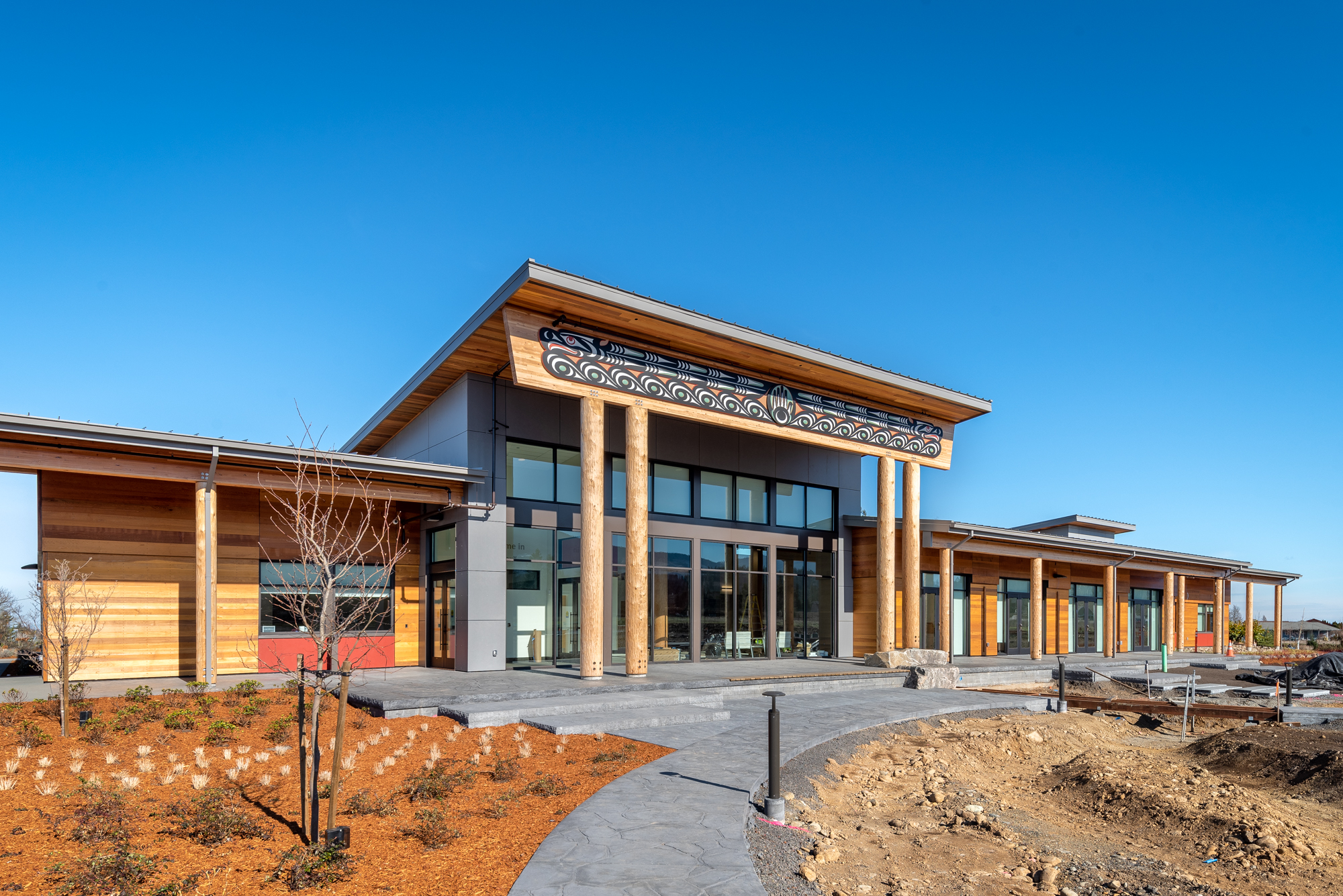
The Jamestown S’Klallam Tribe Healing Clinic is a medication-assisted treatment facility, which helps patients in and around the Olympic Peninsula receive treatment for substance use disorder. It was built by the Jamestown S’Klallam Tribe for use by tribal members and the larger Clallam and Jefferson counties community.
The design team worked closely with tribal elders, storytellers and artists to weave elements of the tribe’s culture into the building and to make stories of healing, change and passage part of the recovery process. The design of the 17,000-square-foot clinic creates a place for healing inspired by the traditional story of the Grandfather and Grandson — which tells how one small act can change the course of the river, and how one act of depth can change your river for good. The nearby Dungeness River is a key natural feature with great meaning to the Jamestown S’Klallam people. As the river tumbles down the mountain, it builds power and momentum, representing the struggle of addiction. As it slows and rolls through the forest, tributaries join it, representing the support and input needed for healing. As it reaches the delta and eventually the ocean, it represents the various paths, accomplishments and successes patients may experience after seeking treatment.
This story is reflected in the design of the clinic, which is arranged around a central corridor that arcs its way through the building. Patients are led naturally and easily through light- and Native American art-filled spaces that provide full wrap-around services, including medication-assisted treatment, primary care medicine, dental care, individual and group counseling, short-term childcare, and transportation. These services have proved to give patients a much higher chance of recovery than traditional methadone dosing clinics, and honor the entire mind and body healing process.
“The patients being treated here have been dismissed, judged, and basically disregarded by most of society. Then they come for treatment in a beautiful building, in a beautiful landscape setting; and it’s all built for them to heal. To be part of that is really powerful.”
— Greg Belding, principal, Rice Fergus Miller
“It is an honor to be a part of the healing journey of the people who will use the JST Healing Clinic to overcome their struggles with opioid addiction. By providing convenient access to dental, primary care and other services that help them achieve overall wellness, we are giving them a better chance to rebuild their lives and better themselves and their communities.”
— Blake Webber, associate principal, Rice Fergus Miller
“I’m proud of this contribution to our community and so grateful the clinic is finally open. This has been a long time coming, and our brothers and sisters have been waiting for this care. I know we’re going to save a lot of lives.”
— W. Ron Allen, chairman, Jamestown S’Klallam Tribe
Here’s what the voters said:“Not only is this a beautiful building but it also brings critical services to those in the greatest need on the Olympic Peninsula.”“Great example of design for dignity!”“Beautiful building that serves a very needed and noble purpose.”
Project Team
Owner: Jamestown S’Klallam Tribe
Architect: Rice Fergus Miller
General contractor: Korsmo Construction
Civil engineer: Coffman Engineers
Structural engineer: Lund Opsahl
Mechanical/plumbing engineer: Ecotope
Electrical engineer: TFWB Engineers
Landscape architect: Fischer Bouma Partnership
Owner’s representative: Wenaha Group
Rice Fergus Miller Team
Greg Belding, principal in charge
Blake Webber, project manager
Gena Lee, interior designer
Sam Tomlinson, designer