

Bremerton project has musical overtones as a tribute to former resident Quincy Jones
The public and private effort is coming together to revitalize a downtown Bremerton street.
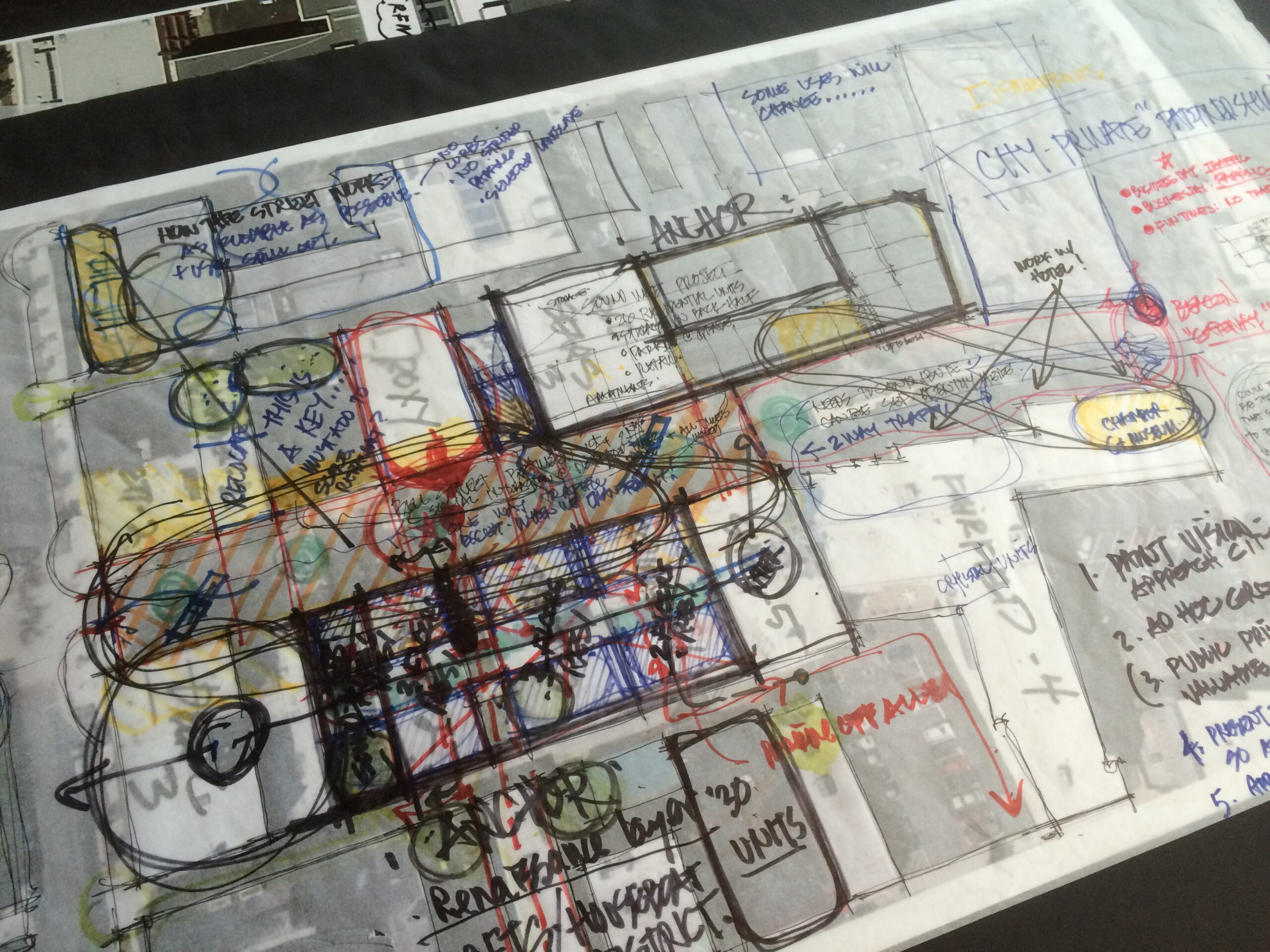
As a musician and an architect, I have always found the two practices to have a fundamental connection. Both music and architecture are based in mathematical relationships that evoke emotional responses.
The journey to designing Quincy Square in Bremerton, Fourth Street from Washington Avenue to Pacific Avenue, was no exception and unfolded like a jam session: we started with the architecture (geometry and space) added a metaphorical layer of music (rhythm, dynamics and harmony), and a tribute to Quincy Jones to turn a public debate over trees into a movement not based on a contract, but on an expansive desire to revitalize downtown Bremerton for the people and by the people.
GENESIS
To understand the composition, we must revisit Bremerton’s heyday: 1945–1985.
World War II was over, troops were back home, and in Bremerton a bustling downtown meant you could buy penny candy, fishing bait, or new tires at Sears, get a haircut or a shoeshine, or quench your thirst at the Officer’s Club. Fast forward to the late 80s. Another shopping mall was birthed in nearby Silverdale and lured downtown’s major retailers to the new air-conditioned “main street” — with a few exceptions, one being Steve Rice, founding principal of Rice Fergus Miller. He opened his architecture practice in 1987 in the virtually empty downtown Bremerton.
Bremerton’s decline, like many towns, was sudden and its return as a destination would take nearly 30 years. At an interlude in 1993, a local improvement district (LID) created a pedestrian gateway along Fourth Street to connect downtown Bremerton to the waterfront. In the early 2000s, the Kitsap Conference Center, several condo projects, and the Harborside Fountain Park rejuvenated the waterfront, but most of Fourth Street remained vacant.
In 2014, a Kitsap Sun front-page story declared the city would remove all the trees in the business district along Fourth Street. In the city’s estimation, this proverbial silver bullet would bring its former retail center back to life. With Fourth Street in the backyard of Rice Fergus Miller’s downtown Bremerton office, Steve Rice read that as a call to action. He asked the mayor to pause until the community had a chance come together for a vision based on forward-thinking planning principles. The mayor agreed and Rice Fergus Miller led an ad-hoc community design committee, comprised of community members who wanted to be part of the process.
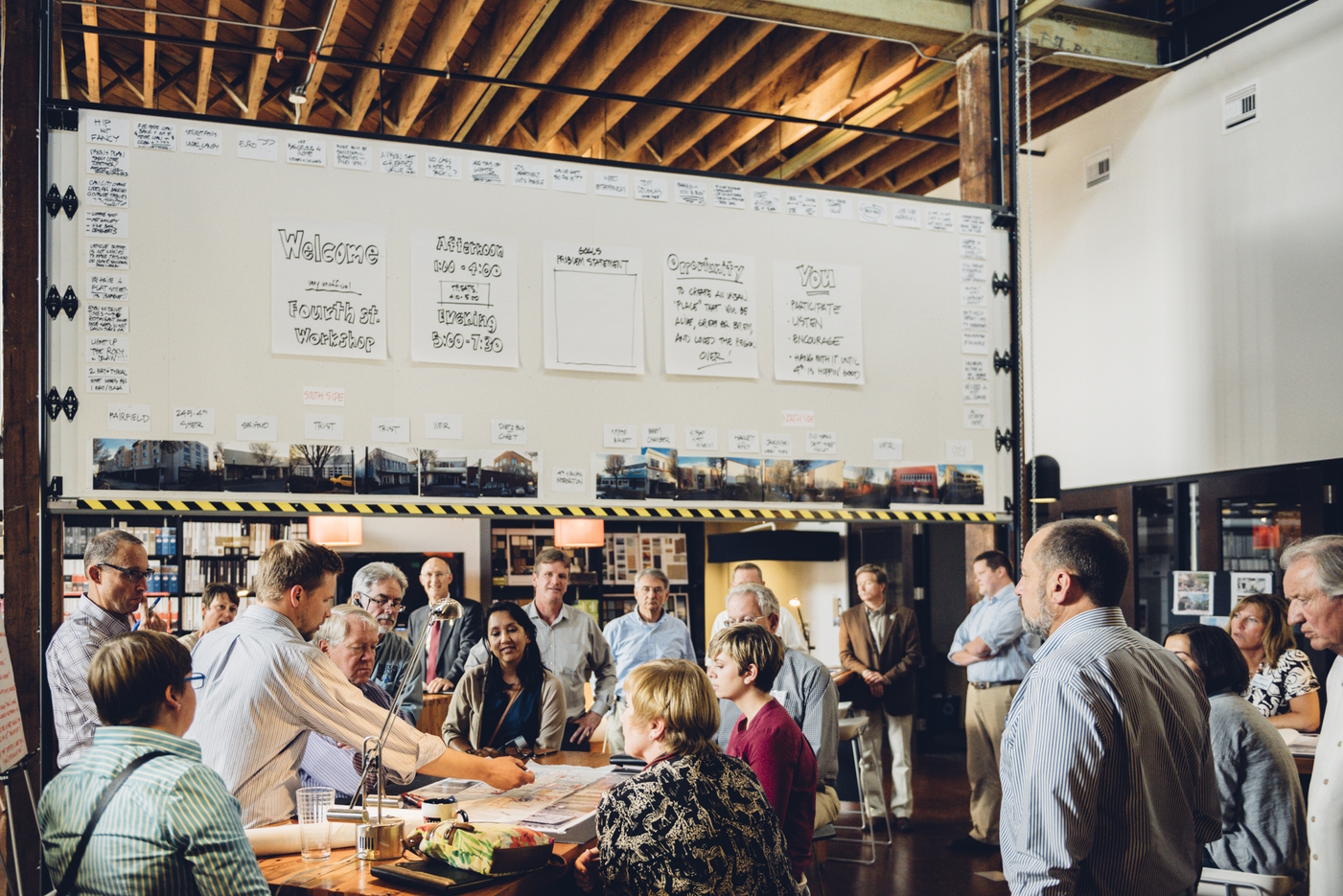
This is when I got involved with the project. Rice Fergus Miller’s office became an impromptu community center, hosting dozens of charettes with over 50 Bremertonians. We acknowledged that blocks full of department stores from Bremerton’s heyday would never return, but a mix of housing, restaurants, art studios, and music venues could prosper. An essential element would be a street design that easily flexed between car mode and people mode to create a public gathering place. Our ad-hoc volunteer committee became the Fourth Street Action Group and we forged ahead to fulfill this vision.
FROM THE KEYBOARD, A STAR IS BORN
In 2016, Fourth Street Action Group member and landscape architect Emily Russell saw Quincy Jones share a touching story in an interview with Stephen Colbert:
“We went out there and we wanted to be baby gangsters and rule Bremerton. We went in an armory, and we heard there was lemon meringue pie and ice cream. I was 11 years old … we ate up all the pie (then) … I went into Mrs. Airs office, and there was a spinet piano in the corner. So I went over to the piano slowly, and I touched it, and every cell in my body said this is what you’re going to do the rest of your life.”
At this moment we knew our Fourth Street design concept had to honor Quincy Jones, who discovered his love for music in Bremerton as a child. Inspired by the moment Jones first discovered his lifelong passion, a piano motif became the organizing element for the street. Embedded in the street paving design, black and white keys define gathering spaces, seating areas, and landscape zones, transforming what could have been an ordinary plaza into something sensational to honor a legend.
COME TOGETHER NOW
Architecture and music benefit from collaboration, whether in a charette or a jam session.
Much like Steve Rice in 2014 asking the city to reconsider plans that did not fully engage its community, the African American community made our team aware that we had just done the same in 2020. Our reliance on typical outreach methods meant we had naively left out the most essential stakeholder group whose iconic Quincy Jones was at the center of this vision. During a public meeting, I will never forget how several African American community members shared their discontent with the process and felt left out. The Fourth Street Action Group’s collective hearts sank as we recognized our short sightedness. Acknowledging our immense oversight, we wanted to make it right, immediately.
Several dedicated community outreach sessions were added to seek input from local youth, elders, and civic leaders in Bremerton. Soon ideas from people in the African American community poured in to influence what Quincy Square will ultimately become.
We learned about Mr. Jones’ upbringing in Sinclair Heights, a now demolished segregated housing development in west Bremerton. More importantly, we learned about the African American community’s deep roots in Bremerton, including the Black Bremertonians who came to work in the shipyards and upon whose shoulders Quincy was raised. The already compelling story of a musical legend became a necessary story of honor, endurance, and celebration.
BACK ON THE BLOCK
In revitalization efforts, public money often spurs private investment, but the shared vision for Quincy Square led to private investment jumping ahead of public improvements. Sound West Group, an early supporter of the vision, restored the iconic Roxy Theater and converted the vacant Sears department store and Ford dealership into the B Flats loft apartments. A new mixed-use housing development is planned, and businesses envisioned early in the planning process, like Dog Days Brewing and Axe & Arrow Gastropub, are now located on Fourth Street.
As private interests complete the building renovations on the block, the city is doing its part to remake the street. Not only is the city leading public funding efforts, it has been our partner in creating this atypical street design. The street will be a flush surface from storefront to storefront, and lined with trees and lighting. Food truck hookups, interactive musical sculptures, and a busker platform will provide festival street elements. Construction of Quincy Square is expected to begin this year.
I am honored to have been part of the process of creating Quincy Square. I saw firsthand how bringing an engaged community together in pursuit of something better — even all the chords we did not mean to strike — can inspire how true public spaces get built.
Dean Kelly is a principal and architect at Rice Fergus Miller, and vice president of the emerging Music Discovery Center nonprofit in Bremerton.