

Capital Facilities Plans: A Roadmap for Success
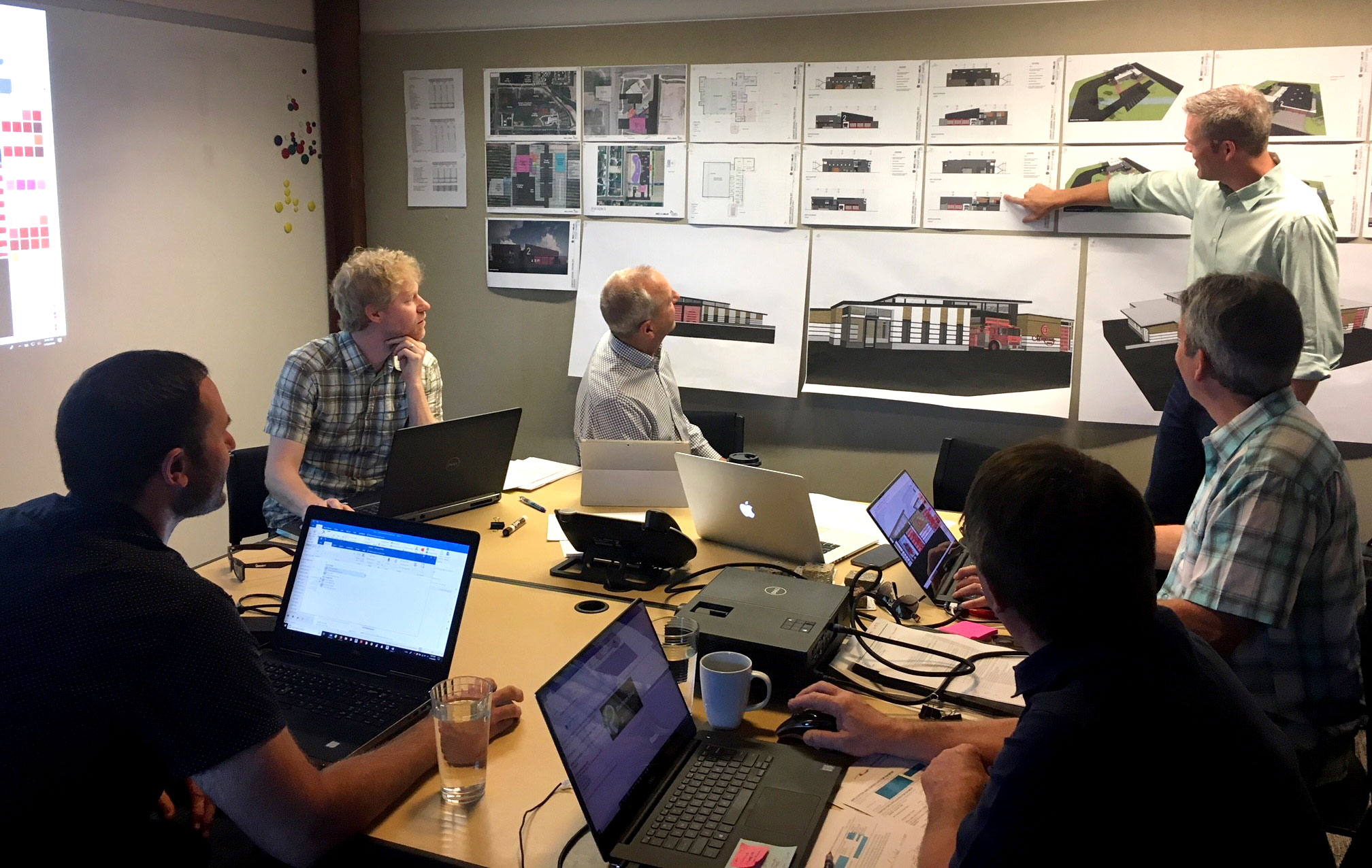
Running a fire protection district or department comes with a wide range of challenges. From labor management to training to complex budgets, thinking ahead 10 to 20 years for how the organization will operate, let alone what your facility needs might be, can be a daunting task. Chances are, planning your future facilities is not the highest task on your priority list, even if you know it should be.
Where do you begin?
Thankfully, there are a variety of knowledgeable consultants who specialize in helping fire service professionals plan for the future of their organizations and communities. If you’ve never undertaken a facility planning effort don’t be bashful seeking the help of others.
You may be asking, how does a facility plan fit into the overall picture, and why is it important?
In short, a Capital Facilities Plan can help your organization determine where best to expend your precious funding on your physical structures. By analyzing response data and researching future community growth, priorities will begin to identify which facilities should be remodeled, replaced, or relocated. When the approach is data driven, it can aid in obtaining funding through grants or taxpayer measures should that be necessary. Ultimately, a Capital Facilities Plan will be an important component on your roadmap for improving service delivery to your community.
Typically, a Capital Facility Plan will include an inventory of your existing facilities, assessments in the location and relationship to your coverage needs, forecasted future facility needs, proposed locations for new and/or expanded facilities, and the anticipated costs in undertaking those improvements.
Here are the steps you and your planning team should expect in undertaking a facility planning exercise.
1. Fact Finding and Information Gathering
Information is power. Gather every report, assessment, and planning document ever prepared relating to your service delivery. This would include response mapping, call volume, standards of cover, community risk assessments, and a current strategic plan if you have one. These will begin to tell you how well your facilities are located. Any past facility reports are extremely valuable too, which could include seismic studies, geotechnical reports, surveys, wetland assessments, or condition surveys by contractors or subcontractors. Because the capital facility planning process includes a forward look, obtaining local zoning maps, comp plans, and reports on projected regional growth will further confirm where resources would be best positioned. What roads are planned for widening? Where are school districts planning new schools? Ultimately, these reports and documents will build a foundation for the really important planning decisions that lay ahead.
2. Existing Conditions Assessment
Determining where you want to end up requires knowing where you are starting. Having a comprehensive understanding of the physical condition of each of your facilities is an important first step in the planning process.
Architects and engineers are an excellent resource for inspecting, assessing, and documenting the existing condition of your facilities. Their process would typically include looking for life/safety issues, deferred maintenance, and systems that may be nearing the end of their useful life. This team would also be looking for items not compliant with current building and fire codes, even though they may have been compliant at the time the structure was built.
In addition to assessing the physical structures, it is equally important to assess what is below ground. If building additions are anticipated or it’s likely you’ll be replacing a station in its entirely, it will be important to understand the underlying soil conditions, load capacity, and any environmental concerns such as a high-water table, wetland, or potential for buried hazardous materials. These studies and assessments are typically carried out by a team of civil and geotechnical engineers, biologists, and environmental consultants as needed.
Assessing the operational deficiencies is also an important aspect of a comprehensive conditions assessment. There have been significant advancements in fire station design over the last 25 years. Some of the standouts have been the result of advancements in equipment and operations, greater awareness of healthy building environments, more women in the fire service, and COVID, to name but a few.
The conditions assessment often starts the conversation, do we remodel or replace? It’s a complicated question since it intertwines physical condition with response location, together with capacity and operational obsolescence of the station. Costs are an obvious factor as well. Sorting out the best option for your particular situation should involve the expertise of your architect and engineering team.
3. Defining Your Needs
Once you’ve completed the existing conditions assessments, the next step is identifying what needs to be done. This portion of the planning process will discern the long-term facility needs for each station. This would include identifying opportunities for how and where emergency services would be best deployed from.
You can expect your architect and engineering team to facilitate a programming process that would be conducted on a facility-by-facility, department-by-department, room-by-room, detailed basis. This would entail not only the operational areas, but also address community access and use, security concerns, emergency operations, and functional interrelationships amongst your other facilities.
The objective of this programming step concludes with an itemized list of rooms and spaces for each facility, their functional needs, and the square footage necessary to accomplish those needs. The square footage tally will guide many of the subsequent steps – project budgeting, property identification and assessments, funding strategies, as well as establishing a baseline for projecting future needs.
Important to the process will be determining how emergency services can be provided without interruption while any construction is underway. Will your personnel be able to remain in the building during construction, or will they have to be relocated to temporary facilities elsewhere? The cost implications of these decisions can be significant. Involving a professional cost estimator can help answer many of these important questions.
In our experience, focusing on the resources and services provided from the facility is far more important than the facility itself for validating your needs. In many ways, the facility is simply the means to an end. The purpose of your facilities is to provide emergency services, paid for by the citizens you serve. It only makes sense to focus on what it takes to provide those services in an efficient and cost-effective way. This assures long-term value.
4. Projecting Growth
Researching and understanding anticipated changes in your district’s population, demographics, and job growth can be impactful in your planning decisions.
Increases in population and job creation can have a direct impact on your call volume. It’s simple math: More people will mean more calls for service. More senior living facilities and nursing homes can exacerbate these demands if you are running EMS calls. Urban sprawl can affect your call distribution, which in turn could mean longer response times for those residents in these newer communities.
Fortunately, the financial impacts caused by increased call volume can mostly be offset by increases in taxable revenue. However, it is important to note that degradation of response times due to growth are usually only mitigated by the location and staffing capacity of your facilities.
With a little research, a reasonable 25-year population model can be prepared. Current population and census data, together with forecasted changes, is commonly available at the city, county, and state level. Employment data is often available through an economic development council or chamber of commerce. Information on housing starts would be available through your local homebuilder’s association. Zoning and land-use maps can provide clues where city and county planners are expecting growth based on historical trends and public policy.
5. Developing Alternatives
With a solid understanding of your programmatic requirements both today and into the future, your design team can begin putting pencil to paper. They would confirm whether your long-term needs can be accommodated on your current properties, or if relocation to different locations would be advisable. Ultimately, they would develop alternative layouts, as appropriate, for sharing with your staff and elected officials. Their job would be to identify the best strategies for meeting the operational goals and needs of your department.
What if new property is required?
If it becomes apparent that certain facilities will require relocation to better meet your district’s goals, your design team can help you draft a list of minimum property characteristics for screening alternate parcels – size, road access, topography, zoning, utility availability, geology, environmental concerns, and the likelihood of required off-site improvements. Overlaying your Assessor’s parcel maps, potential properties can begin to be identified. The key at this stage is not to consummate any property acquisition but rather understand enough to appropriately account for the costs to acquire and develop real property in the overall improvement plan.
6. Crafting your Budget
For each identified project, the scope of improvements can be vetted for cost effectiveness with the preparation of detailed and comprehensive cost estimates. These can be prepared by a professional cost estimator or a general contractor depending on the procurement laws in your state.
It is very important that your overall cost analysis includes reasonable allowances for expenses above and beyond what you will pay a contractor, often referred to as soft costs. This would include such items as state sales tax, architect and engineering fees, permits, special inspections, land acquisition, and appropriate contingencies.
If the total anticipated costs for any or all your projects exceeds your funding capacity, you can expect your design team to assist in adjusting the scope, rebalancing the improvements, or developing a phased approach where improvements could be undertaken on a more incremental basis over time.
7. Funding Options
The likelihood for a capital improvement plan coming to fruition is substantially increased when the financial plan and facility plan are tightly knit together.
Your financial plan will inform and shape your facility plan as much as the other way around. The financial plan must clearly show that the improvements are affordable, that the needs can and will be accomplished at a reasonable cost, and that the expenditures align with the district’s other priorities. By building an overall capital budget from both the bottom-up and the top-down, balance can be achieved in developing a plan that gets you the most out of every dollar spent and the political support from those who are paying for the improvements.
Funding capital projects has only gotten more complicated and challenging over the years, especially for large multi-project capital improvement plans. It is not uncommon for a funding plan to include a voter approved measure, grants, reserves, loans, or a combination of several of these strategies.
Often utilized is a Citizen’s Advisory Group that can help vet your funding strategy and provide valuable insights regarding community support for a voter-approved funding measure.
8. Ready Set Go!
Serving the fire service industry over the last twenty-five years, we’ve helped many departments and districts throughout the Pacific Northwest assemble their Capital Facility Plan. They have all been uniquely tailored to that organization’s goals and needs. Aspects such as size, resources, staffing levels, organizational make-up, deployment models, and demographics have shaped each one. When it comes to planning, one size does not fit all. If you are curious what any of these comprehensive capital improvement plans might look like, here are a couple examples available online:
Gig Harbor Fire & Medic One’s Capital Improvement Plan
East Pierce Fire & Rescue’s Capital Facility Plan
Stay tuned for additional articles about related topics by subscribing to our newsletter.
Authors:
Howard Struve, LEED BD+C, is a Project Manager and Associate at Rice Fergus Miller. He has worked on architectural and planning projects for fire service clients for over twenty years. He is passionate about meeting the needs of his clients through great service and a helpful hand.
Dave Fergus, Principal Emeritus at Rice Fergus Miller, has served the fire service industry since 1995. In June 2022, Dave will retire after a 40 year career in architecture. A celebration is planned for September; subscribe to our newsletter to receive updates.