

Telling a Story Through Design: How concepts inform physical spaces
Storytelling has been a key part of human culture from the beginning. It is a tool that helps us understand, explain, and process the experience of being human. A story can provide reason, purpose, and the proverbial “why.” Storytelling fuses communication with art, bringing people together in discovery and mutual understanding over something they can relate or respond to on a deeper level.
Creating Meaning
When it comes to design, storytelling is an imperative part of the process. If we are not careful, design can quickly become arbitrary, trendy, and bloated. Storytelling guides the project concept or big idea, and the supportive elements too. When we weave a story throughout a project, we create a filter we then use to make design decisions. It’s not about personal preferences, trending styles, or the color of the year. It’s about what connects to the project, what belongs to it.
Story can be crafted from all kinds of things, from the project site and surrounding environment to culture, core values or a mission statement. Each of these origins of inspiration are unique to the project and can be expressed and celebrated through a variety of means, from the raw materials of an architectural product to the shape of a reception desk to the emotion of a piece of artwork.
When we design through the lens of storytelling, we have no choice but to find our way to a solution that is special and tailored to the specific project. When the design team and decision makers work together toward a shared vision, the final product has a strong identity. A project becomes a place, somewhere people feel connection.
Story as the Guide
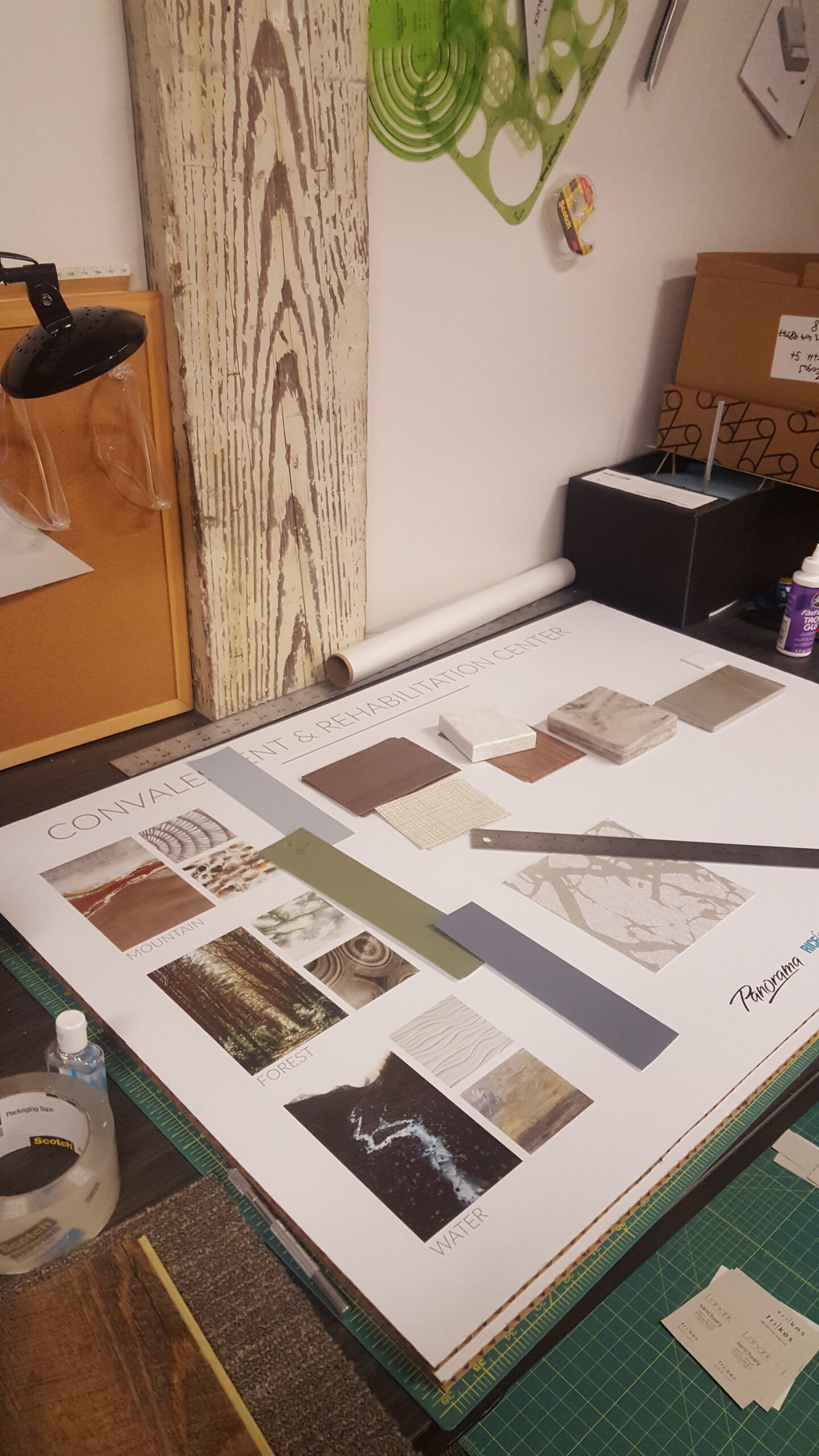
In my project work, the story is the guide. What is this element for? Why is this here? Many project factors are determined by ownership, programming and functional requirements, services that must be supported, etc. Performance criteria drives many of our design choices, as does budget and availability. But beyond those criteria, there lies something more malleable. We narrow down to the strategy, the product, the detail. But what is the material? The color? The texture? We’ve prescribed a solution based on the functional criteria, but what is the sensory experience? What else does one relate to or feel in this space? This is where storytelling takes design to the next level.
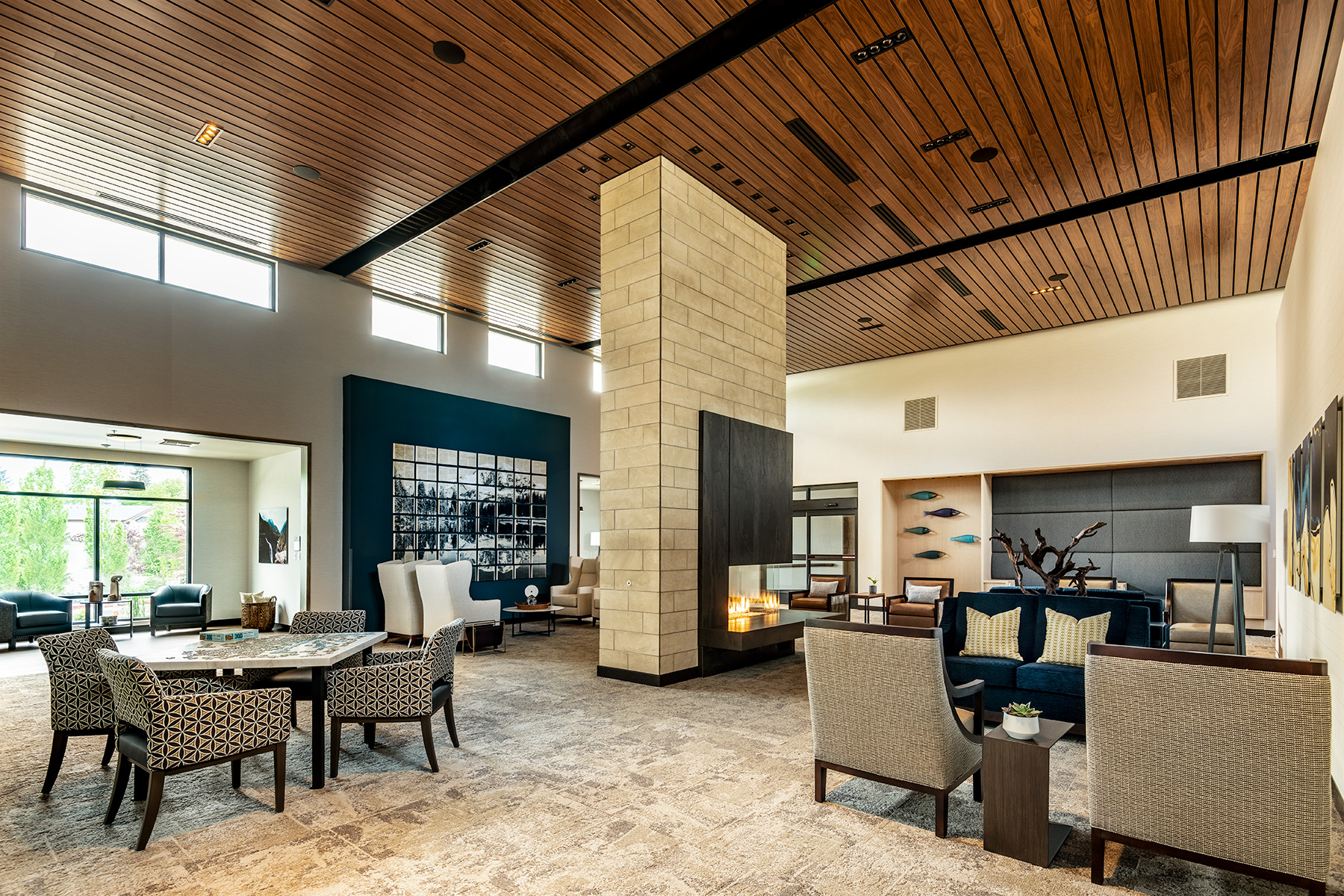
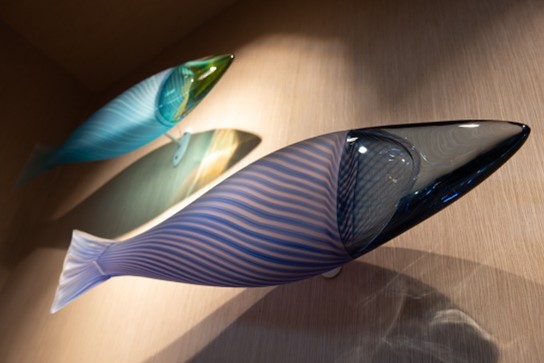
One of our recent projects focused on the celebration of natural views and their quintessence to the community, with sustainability and preservation of outdoor space being a significant goal in the project. We looked for every opportunity to tie our design work back to that overarching concept. For example, the carpet tile selected for the lobby space does more than offer a high performance and aesthetic that references our nature-inspired palette. The solution-dyed nylon the carpet is made from recycled commercial fishing nets. Overlooking this space is an art display of glass salmon, hot-sculpted by a regional Tribal artist, created to bring awareness to the threat that commercial fishing poses to salmon and the communities that rely on them. This is just one example of how the consideration for story and the bigger picture can strengthen design choices.
Storytelling can carry us through design process, through projects, and through life is well. My personal story has defined my career as an interior designer and my decision to focus on housing for aging populations. When I approach a project, or consider next steps in my career, I consider my story, my values, and how the decisions I will make support them.
Experiences that Shape Us
Born and raised in Western Washington, I have long appreciated the natural beauty of the world. Years of hiking, camping, and perusing Puget Sound beaches for “cool rocks” have long informed my approach to design. One of the first steps I take when starting a new project is to consider the location and natural setting. I look at the local stone, flora and fauna, the color of the soil. A strong connection between the built environment and the natural gives a project a sense of belonging.
My love for the outdoors is influenced by my Granddad, who was an avid mountaineer. He was a Boeing engineer, who, after an unexpected leg amputation, found himself requiring the use of multiple devices to live independently, including a prosthetic leg and a wheelchair. Though his methods changed, he continued traveling the country in an appropriately modified RV with my grandmother. Later, his speech and other abilities were compromised by Lou Gehrig’s disease. He was a creative problem solver all his life, and the challenges he faced proved to be opportunities for inventiveness. This spirit of creative problem-solving inspires me daily in the work I do.
On Being Conscientious
It’s important to be conscientious when we design, and to consider what it might be like for people to interact with our projects. I take pride in capturing details that might be otherwise overlooked, from the glare of a too-shallow downlight to a carpet pattern that could be frightening for a person with dementia and diminished eyesight. The smallest details can be so important.
I feel called to help people realize a sense of safety, support, and well-being, in both my professional and personal life. My career goals are rooted in empathy, authenticity, and service. I feel strongly that the spaces I help create should honor the place and community they exist within, as well as all people who will experience them. I strive to make a positive difference for others through my work. My personal story has guided me to where I am today and continues to shape my path forward.
Storytelling can bring depth and richness to the built environment, and to our lives as well. Where can we find meaning and connection? What is unique to us that we can share and celebrate with others? What are the ideas, passions, or values that we want to express with what we are doing, whether that is designing a continuing care retirement community or a career path? Storytelling fosters intention and authenticity, which are key ingredients to a strong sense of identity. Celebrate that identity by telling your unique story, through design and beyond.
About the Author:
Susie Parsons, NCIDQ is an Associate and Certified Interior Designer at Rice Fergus Miller, with a focus on Senior Housing. She approaches her projects with curiosity, wonder, and a passion for designing for aging populations.