

Meet the RFM Market Leaders
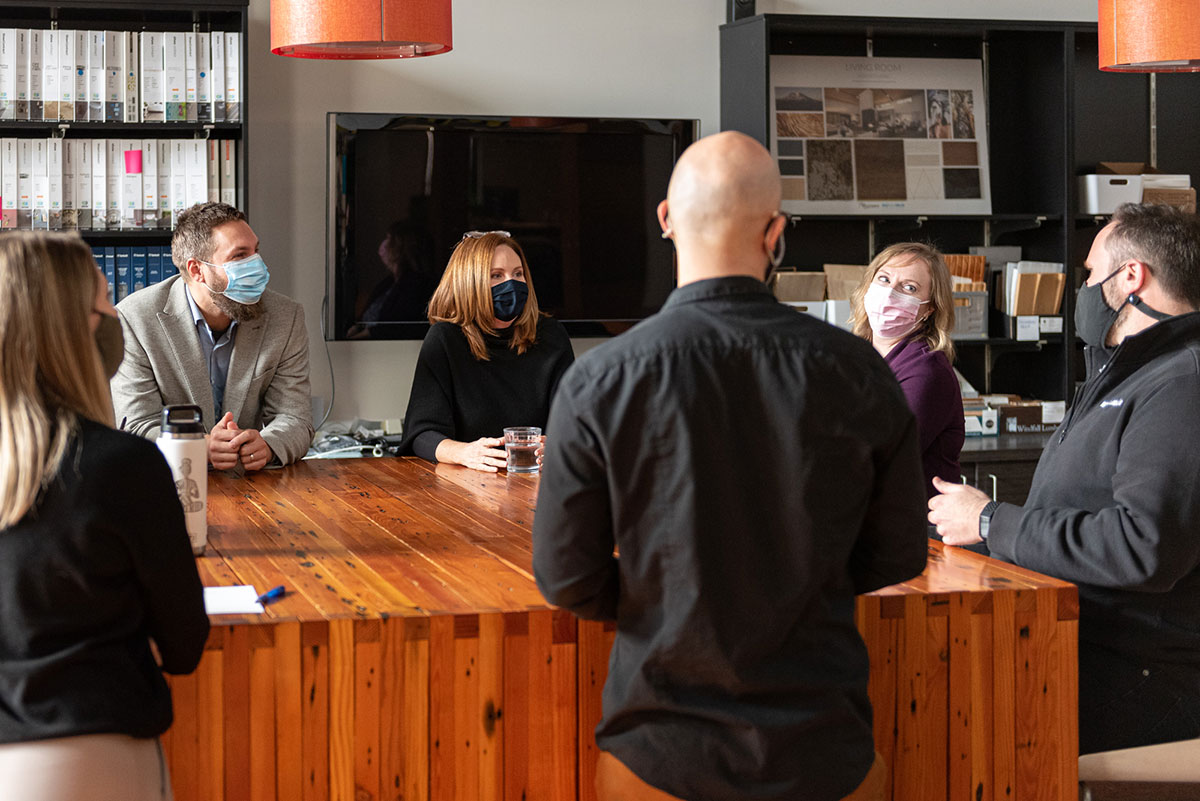
Ever wonder how the people who lead a design firm got their start? Or what inspired them to pursue a career in architecture or interior design in the first place? We talked to the leaders of each market at RFM to find out more about why they do what they do, what it means to work at Washington’s only architectural firm certified as a B Corp, how they balance work and life, and what they do in their free time.
We hope you enjoy learning more about the people behind the practice.
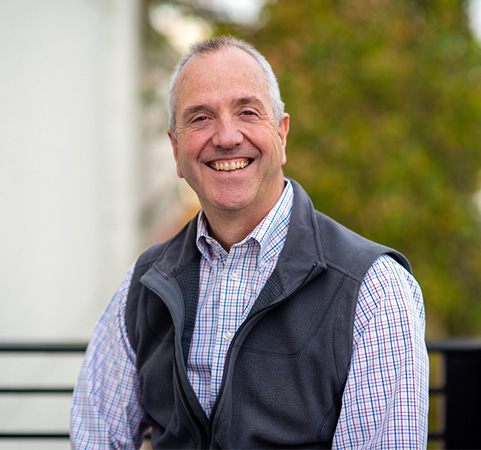
Dave Fergus – Fire & Emergency Services
How did you get into architecture & design?
Something about it clicked in High School and I never looked back.
What brought you to RFM?
Friendship with Steve, together with a lot of respect and admiration.
What is your specialty and why did you pick it?
Working with Fire Districts. While I really enjoy the project types it was the type of clients that got me hooked. Fire Departments are all about serving their community and helping people in their time of greatest need. They are well grounded individuals, compassionate, and invariably put others ahead of themselves.
What principles guide your practice?
Do your best work. Treat your clients fairly and they’ll treat you the same.
What is the most valuable thing that you’ve learned during your career?
Never forget it’s their project, not yours (client opinions matter more than yours).
What is the most valuable lesson you have learned from working with Steve? Or a mentor?
Don’t be afraid to think outside the box.
What’s the most fulfilling step of bringing a project to life?
Seeing it work the way it was supposed to long after it’s been completed.
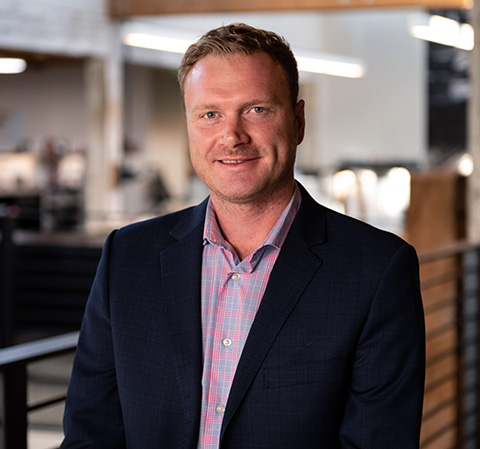
Gunnar Gladics & Sarah Gladics – Fire & Emergency Services
Gunnar Gladics is a Principal in the Fire & Emergency Services market and his wife, Sarah Gladics, is an interior designer and Associate, also specializing in the Fire & Emergency Services market. They just welcomed a baby girl, Sasha Aspen Gladics, into the world at 4:08pm on January 5th, 2022. Sarah, Gunnar, and baby Sasha are all doing well and are taking some time to bond as a family. Gunnar will return to work in February, and Sarah plans to return later this spring. Until then, we wish them well!
How did you get into architecture & design?
I was 17 working a construction laborer on a cold snowy jobsite picking up trash and saw a guy in a suit get out of a nice care, walk around the jobsite for 30m and then leave. I asked the other workers who that guy was and they said he was the architect. I told them: “Well that’s what I am going to be” which got a lot of laughs as you would expect… but here I am now.
What brought you to RFM?
The ability to get out of Seattle and provide a different life for my family while still practicing high quality medical design work.
What is your specialty and why did you pick it?
Healthcare Design. It chose me. I needed a job during the recession and quickly found a niche that always had strong demand while also being an area of design I enjoyed and exceled at it. After meeting my wife, who is a nurse practitioner, my appreciation, understanding and connection to medical design work grew even more personal and stronger.
What principles guide your practice?
Practical decision making in all aspects of design and construction.
What is the most valuable thing that you’ve learned during your career?
When to talk and when to listen. When to listen being the most important!
What is the most valuable lesson you have learned from working with Steve? Or a mentor?
I learned from Mike Miller the importance of persistence and never giving up.
What’s the most fulfilling step of bringing a project to life?
Driving past the buildings I have worked on and knowing we left the client with a product everyone was proud of. That’s a great feeling.
How did you get into architecture & design?
When I was about 11 years old I started going to work with my mom, who worked at an engineering firm. There were drafting templates laying around, so I started sketching house plans and became obsessed! A few years later, my mom told me I could study interior design in college. I really never considered doing anything else.
What brought you to RFM?
My friend Annette Clement, with whom I worked at another firm, convinced me to come here. She said it was a great place to work – and she was right.
What is your specialty and why did you pick it?
Healthcare. I fell into it accidentally by accepting a job offer to design dental clinics when I really needed a job. I didn’t expect to enjoy it or stay as long as I did.
What’s the most fulfilling step of bringing a project to life?
Seeing your vision and hard work being built and usually turning out better than you expected-and learning a lot of lessons along the way.
What do you like to do when you aren’t working?
Spending time with my daughter, gardening, reading, baking, crafts.
What do you consider are attributes or characteristics of a good designer/architect?
Listening, objective and critical thinking, time management, diplomacy, writing and communication skills.
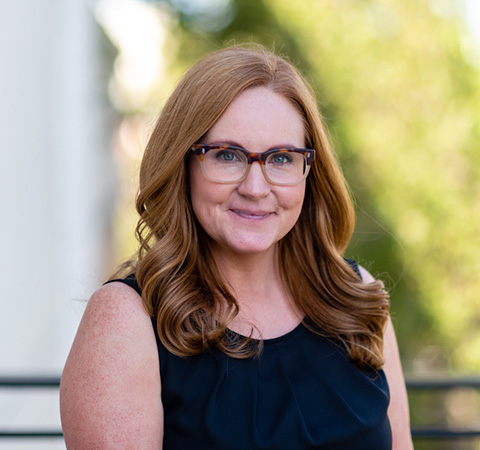
Angie Tomisser – Community Impact
What principles guide your practice?
I have been thinking a lot about this over the last few years and it has become especially important with Steve’s transition. When I look at the path that Steve carved out for himself, I see a practitioner who was truly passionate not only about the project work but especially about the people he served. As a B Corp, our promise is to use business as a force for good. As I carve my own path, I believe that to be the foundational principle that drives how I want to practice and how I want to serve.
How did you get into architecture & design?
Oddly, my fascination with the design of spaces started when I was very young. Like my peers, I loved Barbie, but unlike my peers who loved Barbie for her fashion sense, her sports car or her boyfriend, I was all about Barbie’s environment. I spent hours building custom furnishings for her home out of found items while Barbie sat still on the sidelines waiting for me to finish the masterpiece in which she would live. Ignoring my creative side for years, it wasn’t until my second year of college studying radiology that I realized I spent every Saturday at a local bookstore surrounded by design books. I decided to reconnect with my childhood passion and begin design school. The rest is history..
What brought you to RFM?
Steve of course. I was introduced to him at a Green Drinks event (thanks, Michael Goodnow!) It would be impossible to meet Steve and not want to work with him. I had spent a decade-plus working for firms in the Seattle area and I had the privilege to work on some incredible projects during that time. When my husband and I moved to Bremerton, we were looking for an intentional ‘reset’ both in our home life and our professional lives. I was seeking more connection – a place to feel rooted. When I found out about Steve’s work in the community, I knew this was the place I was meant to be.
What is the most valuable thing that you’ve learned during your career?
Early on in my career, when I was paying my dues, I was working some grueling hours and struggling to balance my workload, my stress levels, and my personal life. I reached out to a senior leader on my team who I trusted. He told me something I will never forget. He said that in life we juggle two kinds of balls, each has different consequences when dropped. Rubber balls if dropped will bounce back, perhaps scuffed or kicked but ultimately unphased. Glass balls if dropped will shatter and are impossible to put back together. He said to keep your eye on the glass balls because in life those represent family and your health, everything else is a rubber ball, and if dropped, can be salvaged. Though I still push hard in practice, it helped to remember what is truly important at the end of the day.
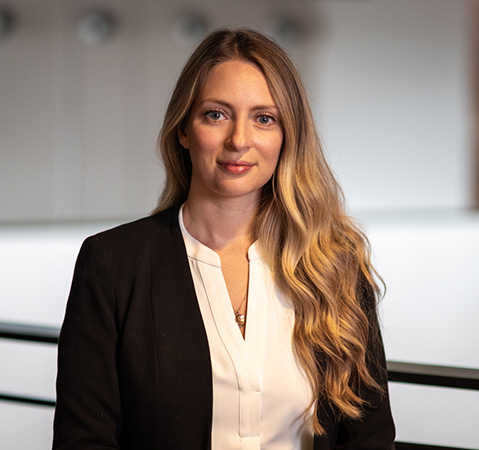
What is your specialty and why did you pick it?
Some of my earliest memories of childhood were how I felt in certain spaces, particularly educational spaces. Learning environments have a profound effect on the experience a student has. Being able to serve clients that put their students at the center is an incredible honor.
How did you get into architecture & design?
I always had a great love for all things creative and had a fascination with interiors, so it was a natural move for me to pursue a career in design.
What brought you to RFM?
I was in the process of planning a cross-country move from the east coast. I came across Rice Fergus Miller and fell in love with their commitment to sustainability and community. I believe strongly in the balance of profit, people and planet, and Rice Fergus Miller’s B-Corp certification let me know that they do, too.
What principles guide your practice?
Equity, clear communication, and curiosity. The rest will take care of itself.
What is the most valuable thing that you’ve learned during your career?
To be curious! Be curious about every aspect of your projects. Get to know your clients, the goals that they have and the problems that they face. Your design practice will always be better for it.
What is the most valuable lesson you have learned from working with Steve? Or a mentor?
Steve’s dedication to his clients is unmatched. Using his skills to help his clients achieve their goals is a compass he has used to create a successful practice and fulfilling career. Watching that is something I will carry with me as I develop my practice and career.
What do you like to do when you aren’t working?
Learn something new! Explore the outdoors, practice yoga, paint, spend relaxing time with my family.
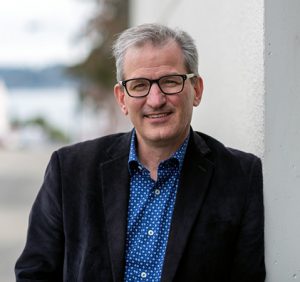
Greg Belding – Community / Housing / Tribal
What brought you to RFM?
A serendipitous request to Steve Rice for an informational interview in 1990. He granted it, we talked a little bit about architecture, a little more about Bremerton (its history, its current state, and its potential), but mostly about our common interest in the outdoors and our connected past.
What is the most valuable thing that you’ve learned during your career?
How about 3 things:
- Listen to what people want and let them know they’ve been heard.
- Be honest with people – their wishes don’t always align with their budgets, with regulations, or with talents.
- People don’t hire us to take them where they tell us, they hire us to take them places they have not imagined.
What’s the most fulfilling step of bringing a project to life?
The most fulfilling step is meeting a client or a user on site after project completion and hearing them say, “I never imagined…!”
What do you like to do when you aren’t working?
In short, I ski. I ski with my family, with my friends, and for work (business development). I ski at resorts, I ski in the backcountry, and sometimes I’ll climb a mountain just to ski down it.
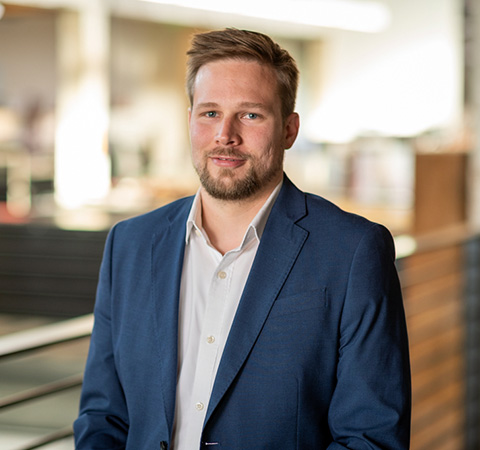
Dean Kelly – Housing / Community
What brought you to RFM?
Culture and opportunity. I was moving my young family across the country and relocating to the Pacific Northwest and interviewed with as many firms in the area as I could. More than anything, RFM felt like a family, and it was very easy to envision myself growing my career with RFM. After touring the office and meeting with staff, it just felt right, and was ultimately an easy decision. This has turned out to be one of the best decisions I have ever made.
How did you get into architecture & design?
As the son of an architect, I have always been intrigued with the built environment and architecture, but I never thought that would be what I would do. I initially started out studying music and sociology in college before moving into construction management. I was working as an intern at my father’s architecture firm at the time but felt that I might end up as a General Contractor or Developer – I didn’t want to be stuck in an office all day long and that’s also were it seemed like the real money was being made. However, through my construction management studies I found that I ultimately craved the creative side of making buildings come to life.
I had a class where the goal was to learn how to read drawings by designing a house and putting together a basic set of drawings. I found myself spending countless hours outside of class designing this house, while no one was ever going to review the quality of the design – that wasn’t the point of the assignment. After that, I realized I needed to be an architect. I was approaching graduation at this point and started looking into graduate programs where I could earn an architecture degree instead of setting up interviews with general contractors. I’ve never looked back.
What is your specialty and why did you pick it?
My specialty is Housing with an emphasis in senior living. My father’s firm where I started my career specialized in mixed-use, multi-family, and student housing and I cut my teeth working on these projects. I gravitated towards the scale of the work and the impact quality design could have on the lives of the residents in these buildings. At a later stop, I worked primarily on food service and restaurant design, learning the intricacies of this project type and the importance a well-designed kitchen has on the experience of the diners. Coming to RFM, I was able to draw on both prior experiences through my work in senior living. I enjoy the scale and complexity of these projects, and the way they bring people together, creating meaningful connections that enrich the lives of residents and activate their broader communities.
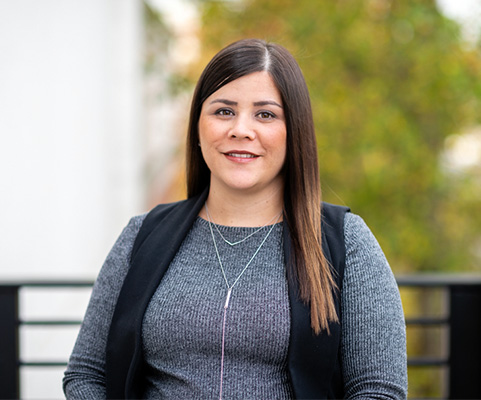
Jennifer Fleming – Housing / Hospitality / Tribal
What is the most valuable lesson you have learned from working with Steve? Or a mentor?
Mike Miller taught me to write handwritten notes and I still practice that today. It’s unexpected and so much more personal than an email. Also, to pick up the phone, call people and check in. Relationships are everything and will be how you grow your career.
How did you get into architecture & design?
I remember being at Washington State University for their Alive program where you get to sign up for your freshman schedule. I learned at that time that I had to make a choice on my major because Interior Design starts freshman year versus a major that you don’t have to declare until your Junior year. I was wavering back and forth between elementary education and Interior Design…you know which choice I made.
What brought you to RFM?
One of our Project Managers at the time was a graduate of Washington State University and she had reached out to the Interior Design program looking for an entry level candidate. RFM wasn’t on my radar, I had been interviewing at firms in Portland and Seattle. I had my first interview shortly after graduating in May 2006, but the workload couldn’t support hiring me yet, so I kept in touch with Steve (I have been known to be persistent) and finally got the job and started November 6, 2006.
What is your specialty and why did you pick it?
Hospitality & Senior Living
What principles guide your practice?
Steve taught me early on to “model the behavior you want to see in others,” and that has stuck with me and directs all that I do as a leader.
We’d like to highlight a few of your projects, which would you like to feature? What was unique about that project? What did you learn from it?
I enjoyed designing the RFM Office and am really proud of what we achieved with off-the-shelf materials. It’s still one of the most energy-efficient office buildings in the United States. I also loved working with the Jamestown S’Klallam tribe on the 7 Cedars Resort & House of Seven Brothers restaurant. If you’re ever headed out to the north end of the Olympic Peninsula, be sure to stop in Blyn to check out the incredible collection of Coast Salish art featured throughout the hotel.
What do you like to do when you aren’t working?
I have an almost 2-year-old son and he is my world. I spend all my free time with him. I also love to travel (so naturally I hate COVID) and I love exploring new restaurants (again, I hate COVID!)